


Your Trusted Partners in Real Estate. Contact us at for all your property needs.
Moving from Kelowna to Victoria
A 2026 guide from Victoria REALTORS® who made the move themselves
We're Harrison Siemens and Corey Lister, REALTORS® with Caliber Property Group and Coldwell Banker Oceanside Real Estate. We both made our own moves to Victoria, and now we help people relocate here from across Canada. Before real estate, Harrison spent six years as a property appraiser.
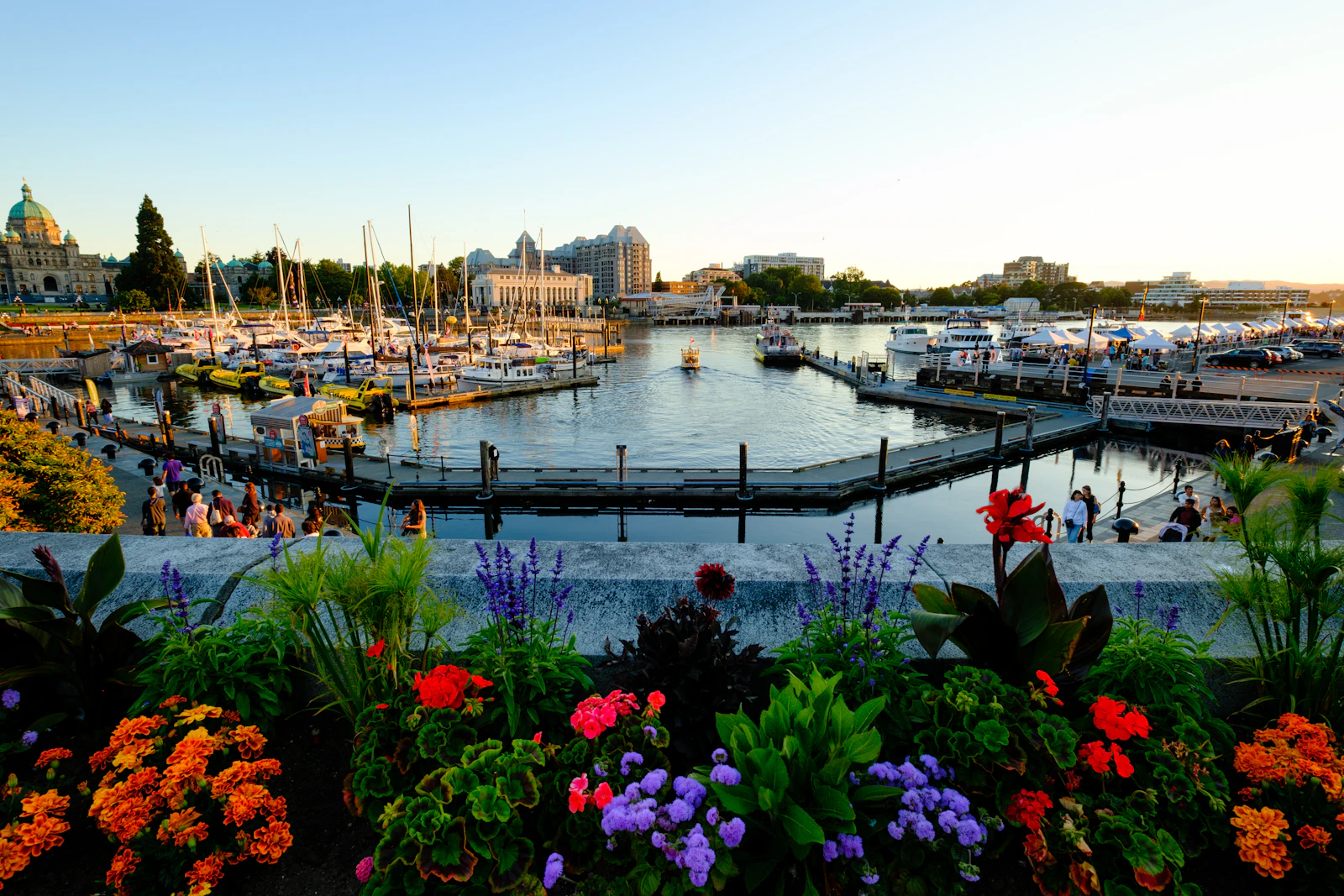
Kelowna and Victoria have a lot in common: lake or ocean, wineries, golf and a slower pace than Vancouver. The people we help make this move usually want three things: milder winters, cooler summers with less wildfire smoke, and a real city on the water with everything close by.
The price step is smaller than most people expect. A Victoria house costs more than one in Kelowna, but condos are close to even. And because Victoria is surrounded by ocean, it has a strong long-term track record of holding its value.
Home prices: a smaller step up than you'd think
A typical Victoria house costs about $223,000 more than one in the Central Okanagan, and a condo only about $51,000 more, based on each region's real estate board for September 2026.
| Home type | Central Okanagan | Victoria Core | Difference |
|---|---|---|---|
| Single-family house | $1,057,200 | $1,280,100 | about $223,000 more |
| Condo / apartment | $496,700 | $547,800 | about $51,000 more |
Benchmark (MLS® HPI) prices, September 2026. Sources: Association of Interior REALTORS® via Vernon Matters and Victoria Real Estate Board.
Why Victoria homes hold their value
- Victoria can't grow outward. The city is surrounded by ocean on three sides, with the Malahat and protected farmland limiting expansion to the north and west.
- Kelowna has more room. New neighbourhoods keep going in on the hillsides and in West Kelowna and Lake Country, so new supply can keep pace with demand.
- Demand keeps coming. People move to Victoria from across Canada every year for the climate, the ocean and retirement.
Limited land plus steady demand is why Victoria has a strong long-term track record of appreciation, and why we expect prices to keep rising over time. No one can promise where the market goes in any single year, but constrained supply has historically worked in Victoria owners' favour.
How Kelowna buyers make it work:
- Condo buyers: the gap is small, so you can usually make a like-for-like move.
- House buyers: look at the West Shore. Langford, Colwood and Sooke offer newer homes and more space for the money, 20 to 40 minutes from downtown.
- Buy based on value. Harrison is a former property appraiser, so we can show you how any home's price compares to recent sales before you make an offer.
Cost of living: what changes, and what doesn't
Moving within BC keeps the paperwork simple. Your income tax, MSP coverage, driver's licence and ICBC insurance all stay the same; you just update your address.
- Rent while you look. A two-bedroom apartment averages $2,640 a month in asking rent in Victoria, versus $2,330 in Kelowna, about $310 more. (Statistics Canada, Q2 2026)
- Property transfer tax. You're already used to BC's rates, so there are no surprises here: about $23,600 on a $1,280,000 Victoria house.
- Heating and cooling. Victoria's mild winters and cooler summers mean smaller heating bills, and many homes get by without air conditioning.
Your Kelowna-to-Victoria moving checklist
- Update your address with ICBC, MSP (Health Insurance BC) and the Canada Revenue Agency.
- Family doctor. Sign up with BC's Health Connect Registry once you have a Victoria address.
- Book your ferry. Driving down? Reserve your BC Ferries crossing from Tsawwassen to Swartz Bay ahead of time, especially with a moving truck.
- Sell and buy in step. We can line up your Victoria purchase with your Kelowna sale, and refer you to a trusted Kelowna agent if you need one.
Climate: milder winters, cooler summers
Victoria is about 7°C warmer than Kelowna on a typical January day, and about 4°C cooler on a July afternoon. Snow is rare: about 33 cm a year on 7 days, versus 64 cm over 21 days in Kelowna.
| Kelowna | Victoria | |
|---|---|---|
| January average high / low | 2°C / −3°C | 9°C / 4°C |
| July average high / low | 28°C / 13°C | 24°C / 12°C |
| Snowfall per year | 64 cm | 33 cm |
| Days with snowfall | 21 | 7 |
Environment Canada climate normals, 1981–2010, via Current Results: January, July, snowfall.
Summer without the heat and smoke. Kelowna summers are hot and dry, and wildfire smoke has become a regular part of August for many Okanagan families. Victoria's ocean breeze keeps summer days comfortable, and the air is usually clearer.
Rain: more than Kelowna, far less than Vancouver. Kelowna is drier, but Victoria isn't the rainy West Coast people picture. It sits in the rain shadow of the Olympic Mountains and gets about 705 mm a year, half of Vancouver's 1,457 mm, with the equivalent of about 308 sunny days a year. (Current Results, Daily Hive)
Gardens stay green through winter, cherry blossoms arrive early, and the seawall is walkable year-round.
Getting around and staying close to Kelowna
Victoria is compact. It had the shortest average commute of the eight cities in Statistics Canada's latest commuting study, at 20.5 minutes (May 2024), and downtown, the University of Victoria and the beaches are all about 20 minutes from most neighbourhoods. (Statistics Canada)
Getting back to the Okanagan is easy:
- Fly. Pacific Coastal Airlines flies non-stop between Victoria and Kelowna several times a day on weekdays, about an hour each way. (YLW)
- Drive. Take the Coquihalla to Tsawwassen, then the 1 hour 35 minute BC Ferries crossing to Swartz Bay. Plan on most of a day door to door.
Lifestyle: from the lake to the ocean
If you love the Okanagan lifestyle, most of it comes with you, and the season gets longer.
- Wine country. The Saanich Peninsula and the Cowichan Valley have their own wineries, cideries and farm stands, under an hour from downtown.
- Lakes and beaches. Elk and Beaver Lake and Thetis Lake are 15 to 20 minutes from downtown, plus ocean beaches along Dallas Road, Willows and Cordova Bay.
- Trails. Trade the Myra Canyon trestles for the Galloping Goose and Lochside trails, which run for over 100 km.
- Golf and cycling year-round. Courses and bike routes stay open through winter.
What surprises people moving from Kelowna
- How green winter is. Grass stays green, and you'll rarely need to shovel.
- No summer heat waves to plan around. Patio season runs long, but 35°C days are rare.
- The ocean everywhere. Most neighbourhoods are a few minutes from the water.
- Skiing is farther. Big White is replaced by Mount Washington, a few hours up-island, so many people ski less and hike, paddle and golf more.
- Older homes. Much of Victoria's housing dates from the 1950s to the 1980s, so inspections and an eye for value matter more. Harrison's appraisal background helps here.
Which Victoria neighbourhood matches your Kelowna one
| If you love… | Look at… | Why |
|---|---|---|
| Downtown Kelowna or the Cultural District | Downtown, James Bay | Condo living, walkable, close to the harbour |
| Lower Mission | Oak Bay, Ten Mile Point | Beaches, mature trees, upscale and quiet |
| Upper Mission or Glenmore | Saanich (Broadmead, Cordova Bay) | Family homes, views, close to schools and trails |
| West Kelowna new builds | Langford, Colwood, Royal Bay | Newer homes, more space for the money |
| Lake Country | North Saanich, Sidney | Seaside small-town feel, wineries and farms nearby |
Frequently asked questions
Is Victoria more expensive than Kelowna?
Somewhat. In September 2026 a benchmark single-family home cost $1,280,100 in Victoria's core versus $1,057,200 in the Central Okanagan, and condos were $547,800 versus $496,700. Victoria's limited land, surrounded by ocean on three sides, has long supported its home values.
Is Victoria's weather better than Kelowna's?
It's milder year-round. January highs average about 9°C in Victoria versus 2°C in Kelowna, July highs are about 24°C versus 28°C, and Victoria gets about half as much snow.
Does it rain a lot in Victoria?
Less than people expect. Victoria gets about 705 mm of precipitation a year, about half of Vancouver's, though more than Kelowna's 345 mm.
Do I need a new driver's licence or health coverage when moving from Kelowna to Victoria?
No. Moving within BC, your licence, ICBC insurance and MSP coverage stay the same. Just update your address.
How do you get from Victoria to Kelowna?
Pacific Coastal Airlines flies non-stop in about an hour. Driving takes most of a day, including the BC Ferries crossing between Swartz Bay and Tsawwassen.
Where should Kelowna buyers look in Victoria?
It depends on what you love now. Downtown and James Bay suit downtown condo owners, Oak Bay suits Lower Mission fans, and Langford and Colwood offer newer homes and more space, like West Kelowna.
Can I buy a Victoria home before I move?
Yes. You can start remotely: we can send video walkthroughs and recent comparable sales for homes you like, then you visit for a focused weekend of showings.
Thinking about the move?
Moving across the province is a big step, and we'd be glad to help you plan it. Call or text Harrison at 778-966-1078 or Corey at 250-709-3753, or email harrison@caliberpropertygroup.ca, and we'll talk through neighbourhoods, budget and timing, even before you visit.
Prices and rents last updated October 2026. Photos via Unsplash: Vlad D, Kolby Milton, Sharissa Johnson.